



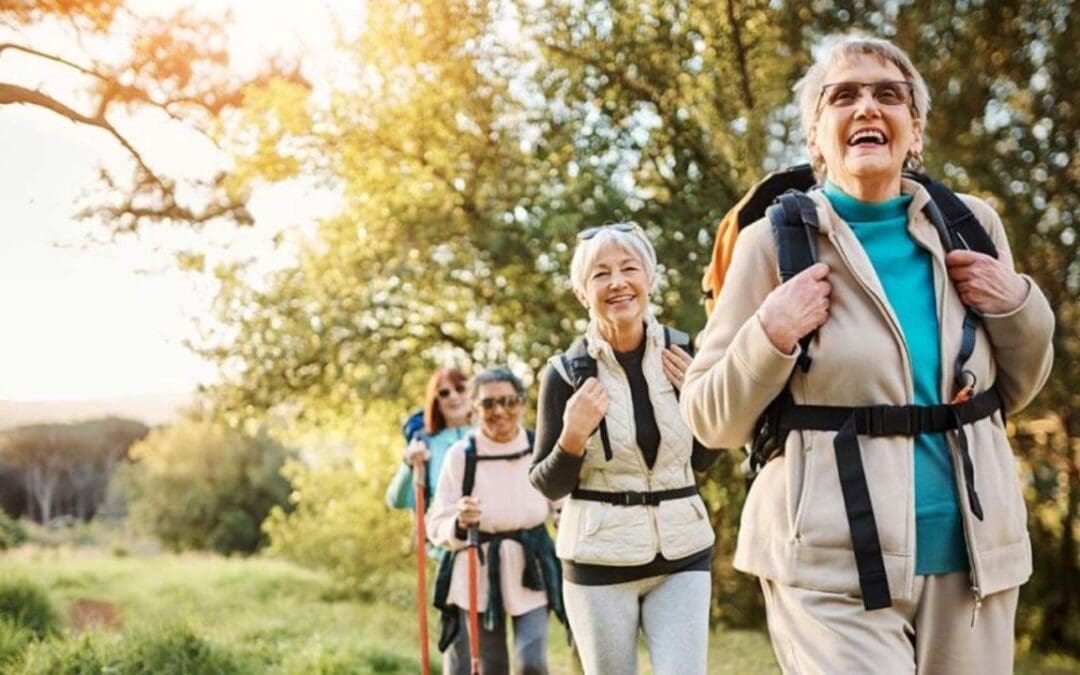
Rucking is growing into a reputable and evidence evidenced new fitness trend, which we fully support! For our clients—especially those striving for time effective healthy aging—it offers so many great benefits for your overall health, all wrapped up in a time-efficient package.
We know you’re busy. You’re already trying to fit in cardio, strength training, and general movement. But what if we told you there’s a simple, low-impact way to make your regular walks and hikes two to three times more effective for fitness and bone density? That’s the powerful appeal of rucking.
What is Rucking?
Rucking is simply walking outdoors with a weighted backpack, or a “rucksack”—the word essentially comes from “hiking with a rucksack.” It transforms a regular walk into a compound exercise, forcing your body to work harder, longer, and more efficiently.
What are the Benefits of Rucking for healthy ageing?
The added weight of rucking turns a simple walk into a potent workout that targets muscle, bone, and cardiovascular health simultaneously.
Increased muscle and bone load (to stimulate bone remodeling) due to extra weight
The most powerful advantage of rucking for healthy aging is the axial load it applies to your skeletal system—meaning vertical pressure down your spine, hips, and legs . This pressure creates the desired mechanical stress capable of stimulating bone remodeling.
Since bone density naturally declines with age, especially due to menopause, incorporating a manageable, sustained load during walking helps to mitigate this loss, providing structural resilience and strengthening the muscles of your core and posterior chain . Rucking is a fantastic, accessible tool for combating conditions like sarcopenia (age-related muscle loss) and improving the overall quality of your structure .
Increased aerobic benefit of carrying extra weight
Adding a weighted pack is a simple way to amplify the energy cost of walking significantly, which is why rucking is routinely found to burn approximately 2 to 3 times more calories than walking without a load . This extra caloric burn comes from the energy needed to accelerate and decelerate the greater total mass (body plus pack) with every step. Crucially, rucking achieves this high energy expenditure while maintaining a lower impact profile on your joints compared to running . If you maintain a steady, conversational pace—ideal for fat oxidation (often called “Zone 2” training)—you can often sustain the activity for longer durations, resulting in a higher total calorie burn over the course of a workout than a shorter, higher-impact session.
Balance and coordination work on uneven surfaces, such as trails.
Walking on uneven ground or trails forces your stabilizing muscles to work overtime. When you add a weighted load, the pack’s mass requires continuous engagement from your core, glutes, and hips to maintain upright stability . This constant need for dynamic stabilization introduces a “stability penalty,” where the body must expend extra energy to manage the increased forces and prevent trips or stumbles. By improving this coordination and inherent stability, rucking directly contributes to reducing the risk of falls, a critical factor in maintaining independence as we age.
Outdoor exercise in nature and its many benefits, including Vitamin D absorption
This one is simple but powerful. Moving your workout outdoors allows you to enjoy nature, reduce mental stress, and, importantly, helps your body naturally synthesize Vitamin D from sunlight. Vitamin D is essential for bone health and immune function, making outdoor movement a potent, holistic benefit.
The Details: Making Your Walk a Workout
The metabolic cost of your rucking session isn’t just about the weight; it’s heavily influenced by how and where you move. By adjusting these three simple variables—speed, slope, and terrain—you become the master of your workout intensity.
| Activity Description | Pace/Condition | Approx. Kcal/hour (68 kg Person) |
| Walking, Brisk | 4.8 km/h (12.4 min/km), No load | 245 |
| Rucking walk | 5 kg pack, level ground, brisk | 371 |
| Rucking walk | 10 kg pack, level ground, brisk | 445 |
| Rucking/Hiking | 5 kg pack, hills | 540 |
| Jogging | 7.5 min/km | 575 |
| Rucking/Hiking | 10 kg pack, hills | 630 |
| Running | 6.2 min/km | 715 |
- Pace (Speed): The faster you move, the more you burn. However, for building a strong aerobic base, stick to a “conversational pace” (where you can talk in full sentences). If you find yourself having to gasp for air, you’ve crossed the line into high-intensity territory, which is best reserved for shorter, deliberate sessions .
- Grade (Slope): This is your secret weapon! Walking uphill forces your body to continuously lift the entire weighted mass against gravity. Even a modest incline or a small hill will significantly increase your caloric expenditure without forcing you to pick up speed, offering high metabolic reward with low impact stress .
- Terrain: Simple, flat pavement is the easiest surface. But if you want a greater challenge (and burn), choose surfaces that are unstable, like gravel trails, sand, or uneven paths. This forces your body to spend extra energy on stability and balance, making the workout more effective!
Rucksack vs. Weighted Vest: A Calorie Difference
While many may prefer the comfort and centralization of a weighted vest, it is worth noting that the traditional rucksack can result in a slightly higher calorie burn for the same amount of weight. Studies suggest that when adding 10% of your body weight, a rucksack increases your energy use by approximately 19.6%, while a tightly fitted weighted vest increases it by about 13.8% This small difference is likely due to the rucksack shifting slightly during your gait, forcing your stabilizing muscles to work harder to keep the load controlled. Double the bonus in my opinion!
How to Start Rucking Safely
Starting rucking is straightforward, but it’s essential to approach it gradually to avoid injury as your body will need to adapt slowly to extra load. Rucking is lower impact than running, but the constant, sustained compressive load requires patience and careful progression.10
Here’s some simple steps to follow:
- Start Light: Begin with something as small as 5-10% of your body weight. For example, a 70kg female would start by adding approximately 5kg to her rucksack for the first 2 weeks. For some, a light load might even mean walking with an empty pack until your body adjusts to the feel of the pack .
- Gradual Progression: Gradually build weight. Pay attention to how your body responds and adjust the weight accordingly. Delayed onset muscle soreness (DOMS) is normal, but you don’t want to be hobbling the next day! The goal would be to build to a maximum of 20-25% body weight for general fitness and longevity.
- Choose Your Terrain and Distance Wisely: Start with walking a distance you are used to on the flat, rather than immediately tackling hills. Adding incline increases fatigue and load on the body. Like with the weight, build your distance and increase elevation gradually.
- Proper Gear: Make sure you have a good quality backpack that is fitted to your body, with adjustable straps. Straps should be firm and sitting above your hips to keep the load close to your body. Make sure you have good quality, supportive shoes for this activity. Depending on the surfaces you are walking on, either a road running shoe, a trail running shoe, or a hiking boot would be appropriate. And if you have orthoses, definitely make sure you wear them for this activity.
- Consulting a Professional: If you are struggling to adapt to this new activity or would like more individualised advice based on your specific health and fitness levels, an Exercise Physiologist would be an excellent option for you.
Ready to try Rucking and make your movement count?
If you are interested in trying this low-impact, high-reward activity, we have partnered with Ruckaway.
Click here to check out their range of high-quality rucksacks and weighted gear: https://ruckaway.com/INFORM10
This link will automatically apply a 10% dicount off your purchase at check out!
Recent Comments